

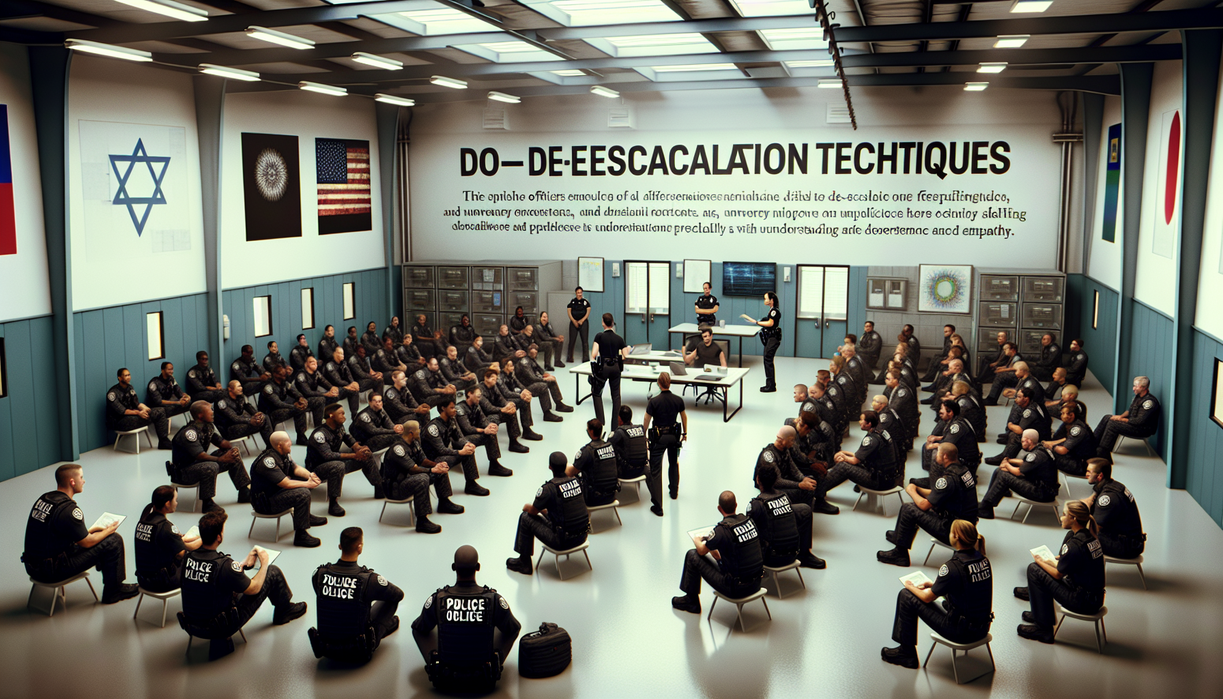
crssblog.com – In my opinion, the national debate over immigration enforcement often misses one crucial piece: how officers choose to act in tense moments. While policy arguments grab headlines, the day‑to‑day encounters between Immigration and Customs Enforcement (ICE) and communities reveal a deeper problem. Modern policing has moved toward de‑escalation, yet ICE appears stuck in an older, more confrontational mindset. That gap does not only affect those targeted in operations; it shapes public trust, officer safety, and the overall legitimacy of immigration law.
This opinion is not about abolishing ICE or ignoring immigration rules. It is about insisting that any enforcement agency operating on American streets should meet the same professional standards expected of local police. De‑escalation is no longer an experimental idea. Research, best‑practice manuals, and real‑world examples show it reduces injuries, complaints, and lawsuit costs. If we genuinely care about human life, constitutional rights, and fiscal responsibility, we should demand ICE officers receive robust, continuous de‑escalation training—and be held accountable for using it.
Opinion: From Warrior Culture to Guardian Mindset
Across the United States, police departments have slowly shifted from a “warrior” approach toward a “guardian” philosophy. This opinion may sound aspirational, yet it reflects an evolving reality in many cities. Officers learn to stabilize crises, slow situations down, create space, and use conversation as their primary tool. They still train for worst‑case scenarios, but they also practice how to avoid reaching those extremes. ICE, by contrast, often appears locked into a raid‑first, ask‑questions‑later posture, especially during high‑profile operations.
Public perception matters. When ICE shows up in tactical gear at workplaces or apartment complexes, the imagery signals war, not careful law enforcement. My opinion is that such optics are not just bad public relations; they actively inflame fear, encourage people to run or resist, and heighten risks for everyone on scene. A guardian mindset would look different: clear communication, visible identification, advanced notice to local partners, and strategic planning to reduce surprise and panic.
Moving from warrior to guardian requires more than a memo from headquarters. It demands rewiring habits built over years of training and field norms. Officers must believe, at a gut level, that slowing an encounter is a sign of competence rather than weakness. In my opinion, ICE leadership has not yet made this cultural transition a priority. Without it, even well‑written de‑escalation policies will remain paper promises with little impact on daily practice.
Opinion on Training Gaps and Real‑World Consequences
To understand why stronger de‑escalation training matters, consider how ICE operates. Agents routinely enter homes, approach vehicles, or appear at workplaces where language barriers and trauma histories are common. My opinion is that this environment makes de‑escalation even more necessary than in typical street policing. Many immigrants have fled violent regimes or corrupt officials; uniforms and badges may trigger deep fear. Without cultural awareness and calm communication, simple encounters can spiral quickly.
Research on local police shows that structured de‑escalation programs can reduce use‑of‑force incidents and injuries for officers and civilians alike. Yet ICE’s training model remains opaque to the public, with limited independent oversight. In my opinion, that opacity is dangerous. When agencies operate in the shadows, mistakes repeat, lessons go unlearned, and mistrust grows. Communities already reluctant to report crimes or cooperate with investigations retreat further into silence.
Real‑world consequences go beyond headlines about raids. Children watch parents taken away, neighbors witness aggressive arrests, entire neighborhoods carry collective anxiety. That climate makes it harder for schools, hospitals, and local authorities to do their jobs. My opinion is that ICE must recognize its ripple effects: enforcement tactics shape social fabric long after a van pulls away. De‑escalation training, applied consistently, could soften those shocks and help separate legitimate law enforcement from needless trauma.
Opinion: Concrete Steps Toward a Safer ICE
If ICE genuinely intends to modernize, it should adopt reforms already standard in progressive police agencies. First, embed scenario‑based de‑escalation modules into academy programs and mandatory refreshers. Include simulations where language barriers, children present, or mental health issues force officers to think beyond commands and cuffs. Second, collect detailed data on use of force, publish regular reports, and invite independent audits. Transparency fosters accountability and improvement. Third, tie promotions and performance reviews to successful de‑escalation outcomes, not arrest quotas. When leadership rewards restraint and thoughtful problem‑solving, culture begins to change. In my opinion, anything less signals that human dignity and community trust remain optional extras, rather than core obligations of a modern enforcement agency. A serious commitment to de‑escalation would not erase all conflict around immigration policy, but it would honor a simple truth: how we enforce laws says as much about our values as the laws themselves.