

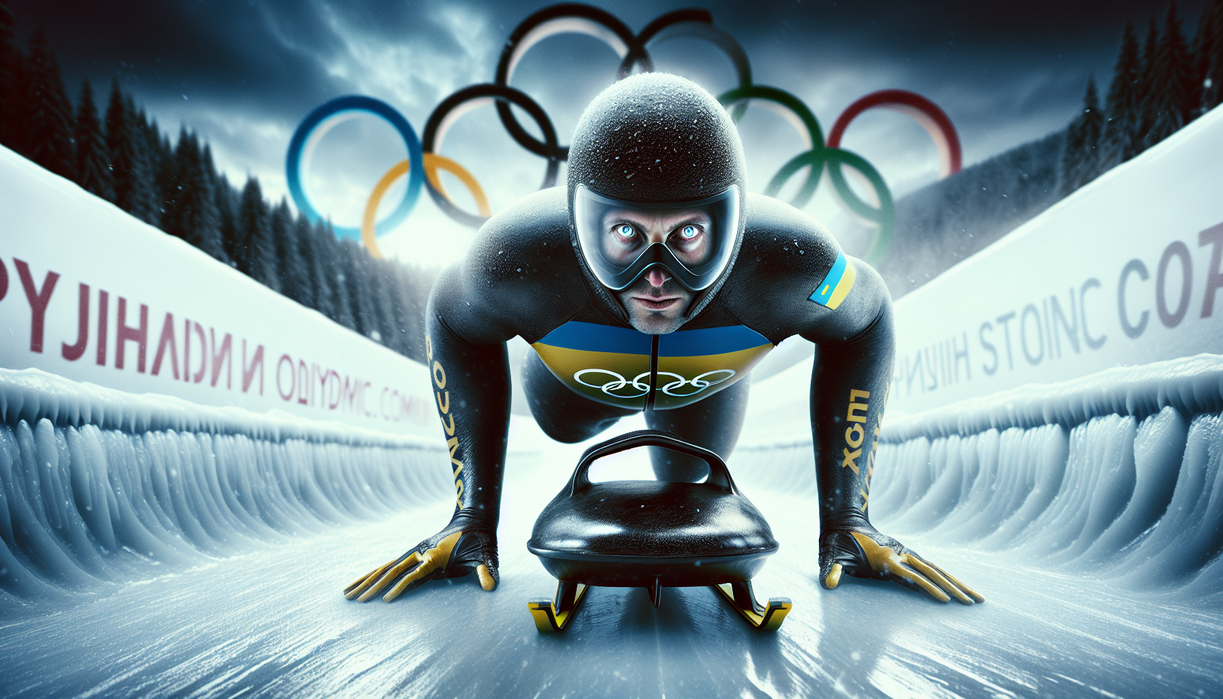
crssblog.com – When Ukrainian skeleton racer Vladyslav Heraskevych slid into controversy in Milan, he did far more than race down an icy track. He turned his run into a public test of how far content context can stretch inside the tightly controlled environment of the Olympic movement. His disqualification did not just end a competition; it ignited a wider argument about expression, neutrality, and the uneasy overlap between sport and politics.
The incident forces fans, athletes, and officials to ask a difficult question: who decides which messages belong on the Olympic stage, and on what basis? Once you look closely at the content context of Heraskevych’s gesture, the International Olympic Committee’s response starts to look less like neutral rule enforcement and more like selective gatekeeping. That tension sits at the heart of this unfolding debate.
Content context meets Olympic neutrality
To understand why this story matters, we need to unpack the content context behind Heraskevych’s actions. He is not a random protester; he is a Ukrainian athlete competing at the highest level during an ongoing war that affects his family, friends, and nation. When he uses his brief moment of visibility to send a message, it emerges from lived experience rather than abstract ideology. This context matters because it shapes how audiences interpret his gesture, whether as provocation, plea, or moral duty.
The International Olympic Committee, however, operates under a formal commitment to political neutrality. Rules restrict visible displays with political or religious themes, yet those rules always rest on interpretation. The same words, symbols, or colors can be read countless ways once content context enters the picture. A slogan seen as humanitarian by one person might be labeled political by another, especially when conflict and national identity collide.
Heraskevych’s disqualification reflects this interpretive power. Officials judged his expression to fall outside acceptable limits, citing regulations intended to protect the Games from political conflict. But without acknowledging the content context of an athlete from a country under attack, such rulings risk appearing cold, even complicit. They imply that tidy optics matter more than the lived reality of those stepping onto the ice.
Free speech rules under the microscope
Every major sporting body claims to support freedom of expression, yet almost all impose boundaries. The Olympic Charter allows some room for personal expression but restricts it inside competition venues. The key phrase usually centers on “political” content, which looks straightforward on paper. In practice, content context turns this into a grey zone. Anti-war messages, solidarity ribbons, or references to human rights rarely arrive labeled as purely political or purely moral.
Heraskevych’s case highlights that ambiguity. Was he promoting a partisan position, or simply asking the world not to look away from suffering? The answer shifts depending on who speaks, which media outlet frames the story, and which audience interprets it. That is the power of content context: it can transform the same action from defiance into compassion, or from compassion into disruption. When rules ignore this layer, they risk privileging silence over meaningful dialogue.
Personally, I see his act less as a violation and more as a protest against the narrow box built around athletes’ voices. Olympians are encouraged to share inspirational life stories, brand partnerships, and uplifting narratives. Yet once their content context turns critical or uncomfortable, the welcome mat disappears. That double standard suggests that what truly matters to authorities is not whether athletes speak, but what they say.
Politics, platforms, and the price of visibility
Modern athletes live at the crossroads of sport, media, and geopolitics. Their social feeds, interviews, and even race-day choices carry layered meaning because of content context: nationality, conflict, sponsorship, personal history. Heraskevych paid a steep price for using that visibility to highlight his country’s struggle. His case warns others that stepping outside safe narratives still carries real consequences. Yet it also proves that attempts to impose silence often amplify the very message officials hope to contain. In a world saturated with information, audiences rarely judge actions in isolation; they read motives, power structures, and historical wounds into every symbol. The real challenge for the Olympic movement is not how to strip politics from sport, but how to engage honestly with the content context that athletes bring to the starting line.