

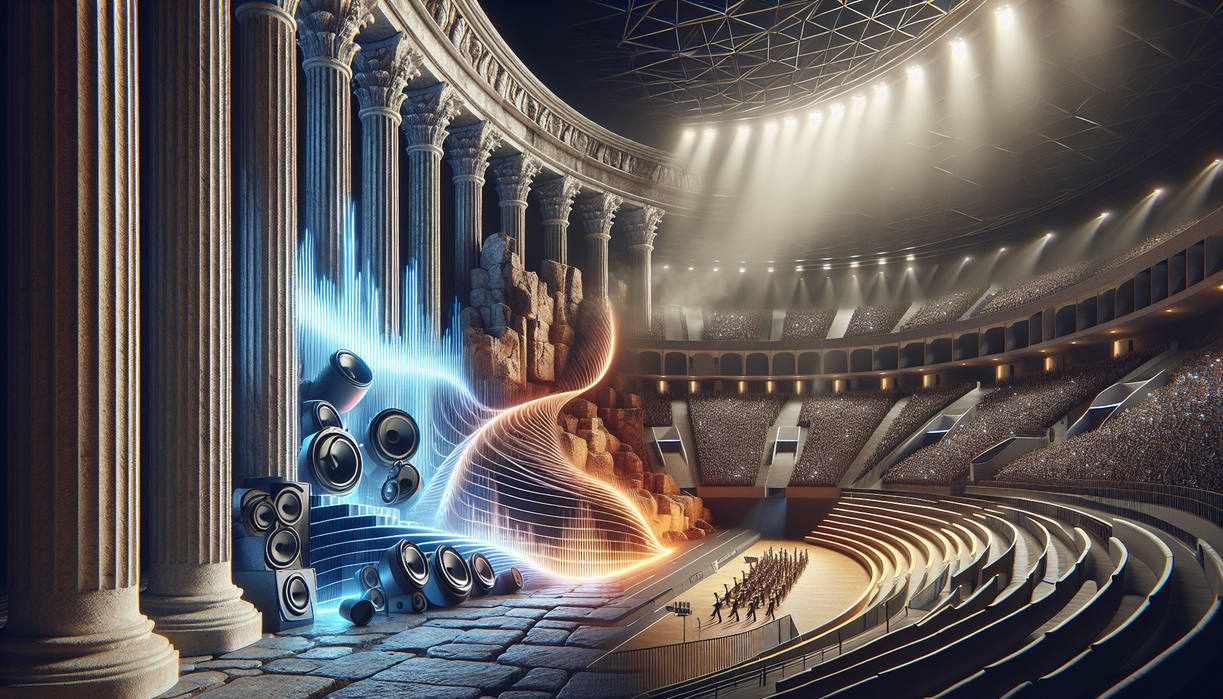
crssblog.com – The latest news from Paris sounds almost unreal: a 2,000‑year‑old Roman arena has become the stage for the Paralympics opening ceremony and the Olympics closing ceremony. Where gladiators once clashed, athletes now roll, sprint, and celebrate, surrounded by sound systems that would feel like sorcery to those first crowds. This news story is not only about sport; it is about how heritage, technology, and human resilience echo together in one monumental space.
For centuries, Roman arenas represented raw power and human spectacle, with the audience itself providing live surround sound. Today’s news adds a fresh layer: immersive audio tech, precise acoustics, and inclusive design for athletes with diverse sensory needs. Inside stone walls once tuned only by voices and footsteps, modern engineers now sculpt sound with digital precision, transforming ancient echoes into a living, accessible soundscape.
From Stone Echoes to Streaming Era
One striking element of this news is the contrast between the arena’s age and the cutting‑edge production deployed inside it. The same limestone tiers survive, but their role has shifted from containing roaring crowds to hosting finely tuned audio zones. Engineers model reflections off ancient walls, tweak delay times, then shape each loudspeaker’s output so every seat hears balanced, intelligible sound. This careful process respects the venue’s fabric while giving global broadcasters clean, powerful audio feeds.
This news also highlights a deeper cultural shift. Roman spectacles celebrated dominance; today’s ceremonies celebrate inclusion, recovery, and global cooperation. The soundtrack mirrors that evolution. Instead of horns signaling combat, we get anthems, spoken word, and subtle audio cues that support athletes with different abilities. The arena becomes more than a backdrop; it turns into a symbol of how societies reframe old power structures into platforms for shared dignity.
Another layer of this news focuses on how spectators consume sound. Many inside the arena listen through traditional PA systems, yet millions more follow via streaming platforms, each with headphones, soundbars, or phone speakers. Audio teams must craft a mix that works both on‑site and online. They mix crowd reactions, music, and commentary so the thrill feels authentic without overwhelming listeners with noise. The challenge is enormous, but success turns ancient stone into a hub for a global audio community.
Immersive Audio Meets Inclusive Sport
News coverage often focuses on lights, choreography, or celebrity performances, but audio choices carry crucial meaning for the Paralympics. Some athletes are blind or partially sighted, so sound becomes a primary guide. Careful placement of speakers gives directional cues, while clear voice announcements reduce confusion. Even the timing of musical builds can support orientation on the field. These design decisions show respect, proving that accessibility is not an afterthought; it is wired into the show’s core.
At the same time, this news underscores how sound must serve people with hearing differences. Many events provide real‑time captioning and sign language interpretation, yet audio engineering still matters. Mixers often keep speech frequencies clean, avoid excessive reverb, and control crowd noise. That way, hearing aids and cochlear implants can process speech more clearly. The old arena, once brutally indifferent to individual needs, now hosts a soundscape crafted to include as many listeners as possible.
From my perspective, the most powerful aspect of this news is emotional rather than technical. Hearing a stadium sing for athletes who have navigated trauma, illness, or disability reframes what victory means. In that setting, every cheer carries history: not only the arena’s ancient battles, but also modern fights for accessibility and representation. The contrast between bloody spectacles of the past and today’s celebration of human adaptability hits with particular force when carried through massive, resonant sound.
Why This News Changes How We Hear Stadiums
When a 2,000‑year‑old arena hosts ceremonies for both the Paralympics opening and the Olympics closing, the news does more than fill sports pages. It challenges how we think about venues, sound, and legacy. Ancient architecture proves flexible enough to support immersive audio, while modern engineers learn humility confronting stone shaped long before their software existed. This meeting of eras suggests a new model for stadium design: one where history is not replaced but remixed, where accessible audio is standard, and where every echo reminds us that technology matters most when it helps more people feel fully present. That reflection may be the most enduring sound of all.