

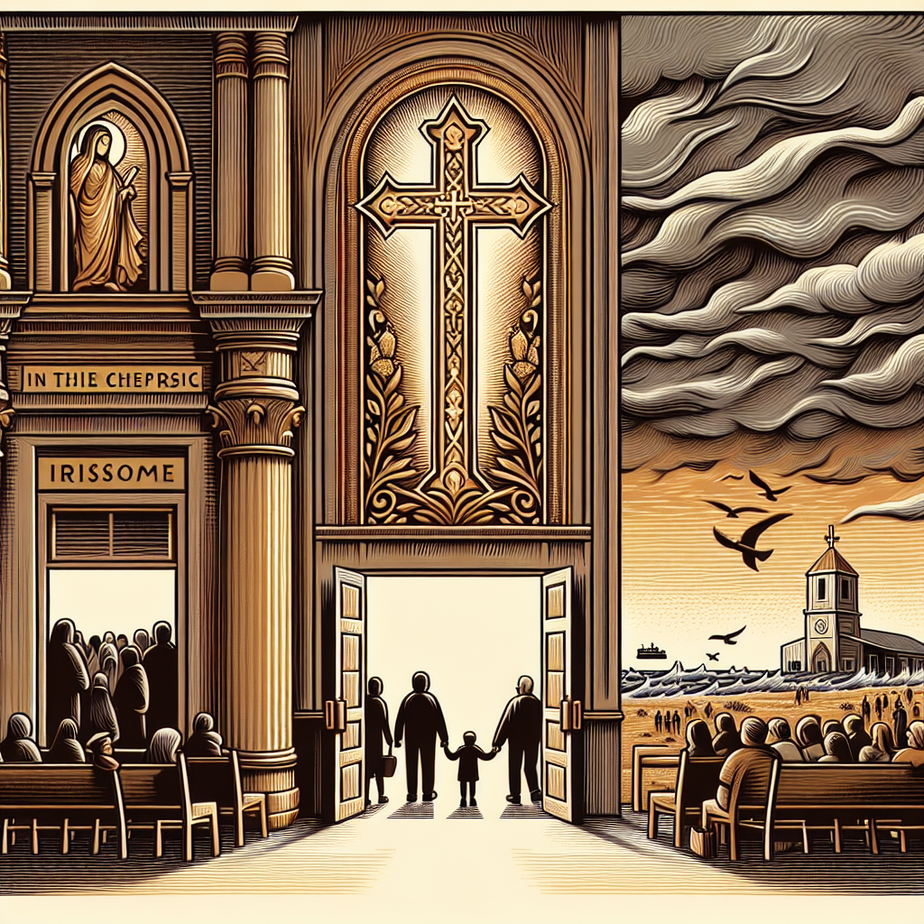
crssblog.com – The Catholic Diocese of Baton Rouge has made headlines with an exceptional act of compassion. Faced with the real and personal challenges posed by intensified immigration enforcement, the Diocese has issued a dispensation allowing those affected by ongoing immigration activities to forego the standard obligation of weekly mass attendance. In a letter to the community, the church underscored its commitment to both faith and humanity, providing solace to individuals experiencing significant distress.
This progressive decision by the diocese is a clear reflection of the church’s understanding of the precarious situation many parishioners find themselves in. Immigration raids have instilled fear and anxiety among communities across the country, making it difficult for those affected to carry on with their usual religious observances. By lifting the obligation of mass, the Diocese not only acknowledges the physical challenges faced by these individuals but also extends a metaphorical hand of support in their time of need.
While some might view this dispensation as a mere procedural adjustment, it signifies something far more profound. It is a testament to the adaptive nature of religious institutions when faced with modern-day challenges. The decision by the Baton Rouge Diocese highlights the necessity of empathy and understanding within religious practices, reminding us that compassion should consistently complement dogma.
Interestingly, this decision also invites a broader conversation regarding the role of religious institutions in social and political matters. Historically, churches have sometimes remained on the sidelines of such contentious issues, but decisions like this surprise move by Baton Rouge suggest a possible shift. It embodies a proactive stance, one that could inspire other dioceses nationwide to consider similar actions when their communities face unforeseen adversities.
This episode is not just about the Catholic Church’s flexibility but also about reinforcing the idea that religion can and should play a constructive role within society’s complex issues. The church’s action is a message of hope for those facing uncertain future prospects due to immigration pressures, affirming that the church is there for them not just spiritually, but in tangible, impactful ways.
Humanitarian Morality: Walking the Talk
Organizations often have a mission statement that prioritizes humanitarian efforts, but true moral leadership shines through actions like this. By choosing to offer a dispensation, the Baton Rouge Diocese has taken a definitive step that aligns its religious teachings with empathetic action. This decision recognizes that the struggles of life often transcend individual control and that compassion is not only an abstract concept but a functional necessity.
Moreover, the Diocese has sent a strong message that the church’s sanctuaries are not limited by physical walls. They extend to emotional and psychological support, adapting to meet the evolving needs of its followers. Bridging the gap between adherence to religious customs and acknowledging real-world hardships demonstrates a new level of operational morality essential in today’s societal landscape.
Beyond Dispensation: A Call for Unity
One cannot overlook the possible impact this decision may have on fostering unity within the community. By supporting those affected in their hours of need, the church becomes a unifying force, empathizing with all community members regardless of their circumstances. This can cultivate an environment where empathy drives action, potentially encouraging parishioners to engage in further outreach and advocacy work in support of those impacted by immigration policy.
Reflecting on the Diocese’s decision, it’s clear it stands as a beacon of hope amid uncertainty. While it may seem like a small deferment of an obligation to some, for others, it represents relief and recognition during a period of immense stress. The long-term implications could inspire other religious and non-religious communities to examine how they respond to crises affecting their constituencies.
Conclusively, the Baton Rouge Diocese’s move offers a compelling narrative about the power of moral action in confrontational times. It emphasizes that organized religion, when responsive to the intricacies of modern-day life, can be a vital advocate for compassion and empathy. As we grapple with the ever-changing global landscape, let this decision inspire not just fellow dioceses, but all of us, to let understanding and support guide our actions.