

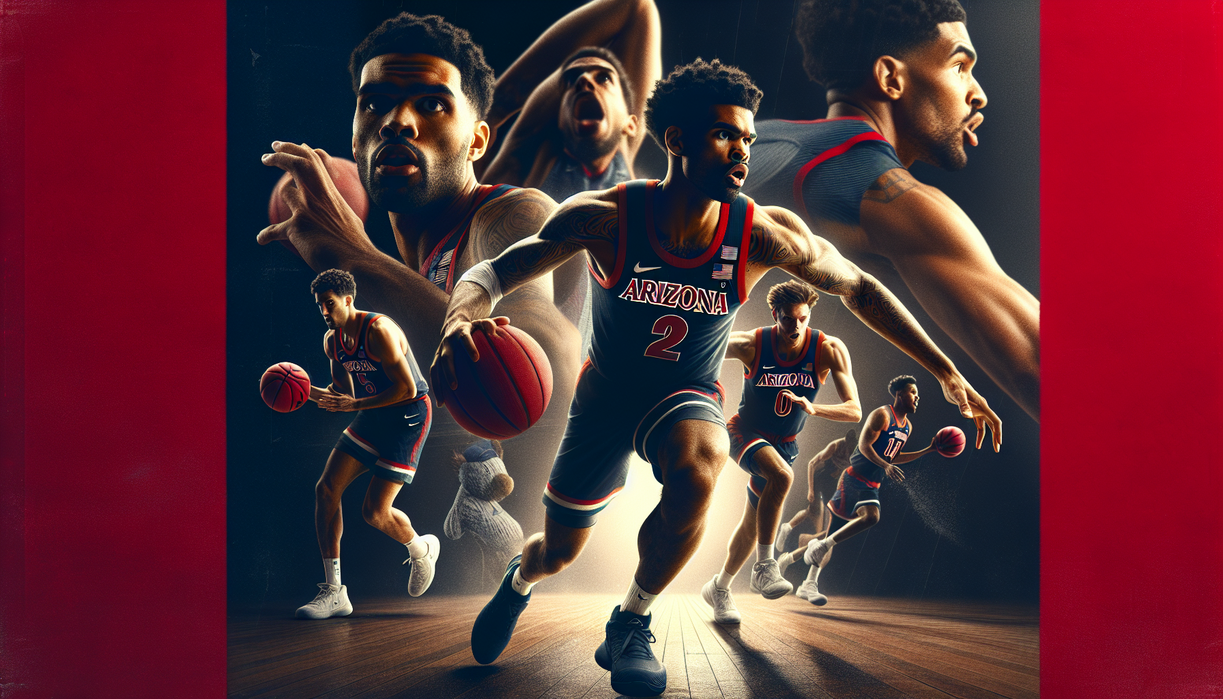
crssblog.com – Context shapes everything about Arizona men’s basketball right now. The program walks into its fifth Final Four carrying both glittering momentum and the weight of history. Two losses all season have created a sense of inevitability, yet March has a brutal memory; nothing is promised, especially on this stage. The context surrounding this run is not just about X’s and O’s. It is also about how the program tells its story, invites fans into the journey, and turns raw emotion into connection.
That is where Arizona’s social media crew steps onto the court. Their mission feels simple but ruthless: don’t be boring, don’t be late, don’t be lame. In the hyper-competitive context of college hoops content, attention is a scoreboard of its own. They are not just posting highlights. They are crafting a living narrative that keeps Wildcat fans glued to screens, even hours before tipoff or long after the final buzzer. This is Arizona basketball reimagined for the digital era.
The Power of Context in Arizona’s Final Four Push
Arizona arrives at the Final Four with only two blemishes, a record that reads like a flex but also a warning. The context of such dominance is tricky. Every opponent now treats the Wildcats as the measuring stick, the team to take down. For fans, that context fuels both pride and anxiety. It amplifies each possession, each whistle, each late-game decision. When your team rarely loses, every close moment feels like standing on a cliff’s edge.
Arizona’s social team understands that this emotional context is gold. They do not just recap victories. They frame them as chapters in a larger saga. They lean into tension, redemption, swagger, and doubt. A simple shot of a player tying his shoes before a game becomes a quiet moment of ritual in this big-picture context. Each clip, each graphic, each caption nudges fans to feel that they are inside the story, not just watching it from a distance.
From a creative lens, this is where context beats pure information. A box score tells you who won. A short, well-edited video framed with the right context tells you why it mattered. It invites you to remember where you were, who you were with, what you shouted at the TV. The Arizona social crew is building an archive of those feelings in real time. That is far more powerful than posting another generic highlight reel.
The context of Arizona’s current run cannot be separated from its legacy. This is not a newcomer stumbling into relevance. The Wildcats have tasted both glory and heartbreak in March for decades. Fans carry those memories like emotional baggage. Past collapses, legendary shots, controversial calls—all of that echoes into this Final Four. The social team’s challenge is to acknowledge that history without letting it suffocate the present.
Storytelling, Strategy, and Social Impact
To capture that rich context, the Arizona content strategy goes well beyond “post final score, move on.” They chase behind-the-scenes moments: locker room reactions, bus rides, quiet hallway walks before a big game. These glimpses reveal personality and vulnerability. In this context, the players stop being just names on jerseys. They become characters with quirks, rituals, nerves, and joy. That shift changes how fans talk about the team at watch parties, workplaces, and group chats.
The phrase “don’t be lame” is more than an internal joke; it is essentially a content philosophy. In the current digital context, bland posts vanish in seconds. Fans scroll faster than a fast break. To stand out, you need timing, voice, and authenticity. The Arizona crew leans into memes, cinematic edits, bold typography, and sometimes pure silence. A single slow-motion walk down the tunnel, paired with the right track, can hit harder than a paragraph of stats. That is emotional context in motion.
My own perspective is that Arizona’s social success rests on one core insight: context first, content second. Too many teams reverse that order. They produce something flashy then scramble to justify it. Arizona seems to start with a question: what does this moment mean to our community right now? Only then do they decide the format. That kind of contextual thinking is why their clips often feel like they belong to the fan base, not just the brand. It is participatory culture, not corporate messaging.
There is also a tactical context worth dissecting. Game days are no longer just about tipoff and final horn. They are 24-hour content marathons. Teasers in the morning. Warmup snapshots in the afternoon. Real-time reactions at halftime. Emotional recaps at night. The Arizona social team has mapped that rhythm. They know when fans crave hype, when they need reassurance, and when they want to simply bask in victory. Matching that emotional arc to content cadence is an underrated strategic skill.
Looking Beyond the Final Four
Win or lose at the Final Four, the context Arizona has built around this season will outlive the last game. This digital story becomes recruiting material, alumni nostalgia, and a blueprint for future seasons. From my vantage point, the real victory is not only on the scoreboard but in how they have redefined what it means to experience Arizona basketball as a fan. By respecting context at every turn—history, emotion, timing, community—they have turned attention into connection. Years from now, people will not just recall where Arizona finished. They will remember how it felt to live this run in real time through their screens, their friends, and their feeds. That, ultimately, is the lasting legacy of a social team that refused to be lame.