

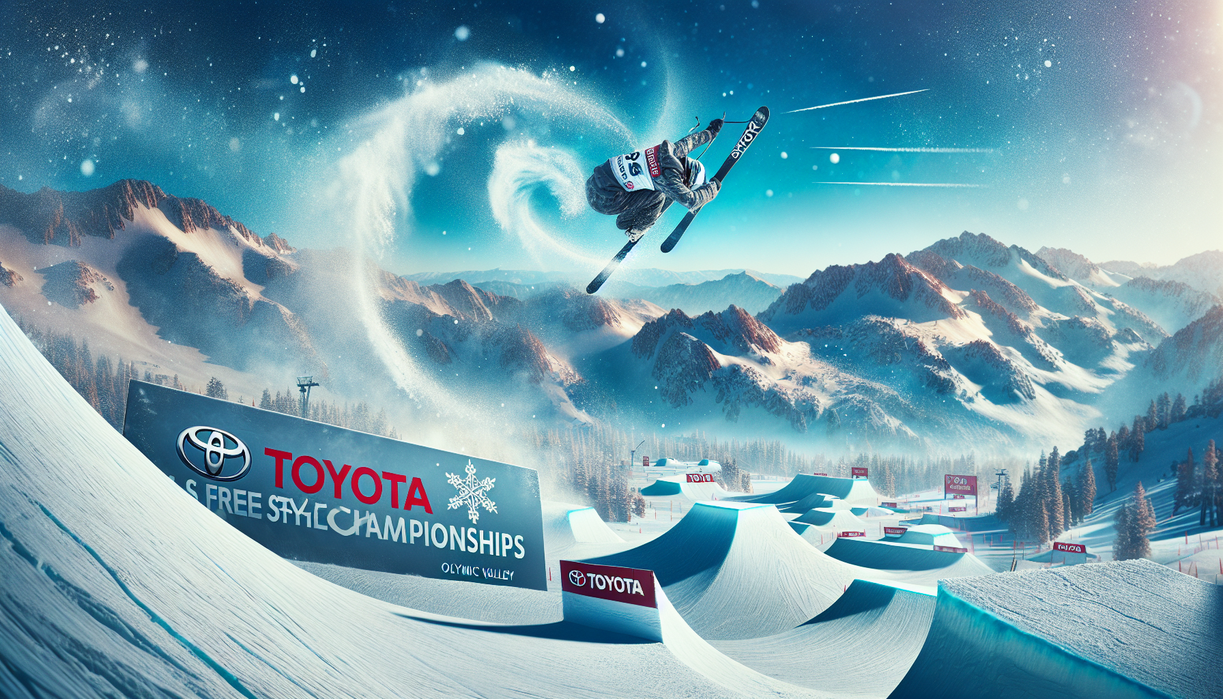
crssblog.com – The Toyota U.S. Freestyle Championships at Palisades Tahoe in March 2026 proved how powerful context can be in elite sport. Against towering Sierra Nevada peaks and late‑season snow, mogul skiers battled not only rivals but a demanding environment. The venue’s Olympic heritage, steep pitches, and unpredictable weather framed every run with extra tension and meaning.
Understanding that context is essential to appreciate what unfolded on the moguls course. This was not just another race; it was a high‑pressure intersection of history, geography, technology, and human ambition. From the crisp air in Olympic Valley to the roar beside the finish corral, every turn, jump, and landing carried the weight of a championship story still being written.
The Championship Context: Mountain, Snow, and Stakes
Palisades Tahoe delivered an alpine context that challenged even the most seasoned professionals. The moguls line dropped into a steep fall line, where bumps hardened under cold nights then softened in the afternoon sun. Skiers had to read micro‑shifts in texture and adapt tactics on the fly, proving that awareness of context can decide podium places.
This event also took place against a broader competitive context. With the 2026 season approaching crucial World Cup standings and Olympic cycles, the national championships acted as both proving ground and pressure cooker. Athletes carried expectations from coaches, sponsors, and hometown fans, layering psychological weight over already demanding physical conditions.
Technology added another subtle dimension to the context. High‑definition cameras lined the course, drones hovered overhead, and live data feeds informed judges, commentators, and viewers. Athletes knew that every movement would be analyzed frame by frame. That awareness influenced risk choices on the jumps, especially for skiers pushing cutting‑edge trick progressions.
Runs, Results, and the Story Inside the Numbers
On paper, the results list offers a neat hierarchy: overall champions, podium finishers, and dark‑horse finalists. Yet context reveals richer stories hiding behind those rankings. Some athletes peaked exactly when needed, stringing together clean turns and precise airs after uneven early seasons. Others missed the finals by fractions, punished by minor bobbles magnified under championship scrutiny.
Judging in moguls lives deeply rooted in context as well. Scores balance speed, turn quality, and aerial difficulty. A blazing fast run loses value if the skier gets tossed off line by irregular bumps. Conversely, a slightly slower descent can shine when the athlete uses the course context, carving tight technical turns that accent the terrain rather than fight it.
Late‑season fatigue changed results too. The longer winter created a physical context where injuries, nagging soreness, and mental exhaustion came to the surface. Some veterans leaned on experience to manage energy across training and qualifiers. Younger skiers, still learning how to pace entire campaigns, sometimes looked explosive one run then drained the next, revealing how endurance intersects with performance.
Why Context Matters Far Beyond the Finish Line
Looking beyond the medal table, the 2026 Toyota U.S. Freestyle Championships at Palisades Tahoe illustrated a universal lesson: context shapes champions as much as talent or hard work. The mountain’s contours, the snowpack, the season narrative, and the emotional weight of Olympic Valley all combined to form a living laboratory for resilience. For fans, understanding that environment turns raw scores into compelling drama. For athletes, reading and responding to shifting context becomes a competitive superpower. Long after the finish banners come down, the real legacy lies in how this particular place, time, and pressure molded skiers who will carry these lessons into future winters.