

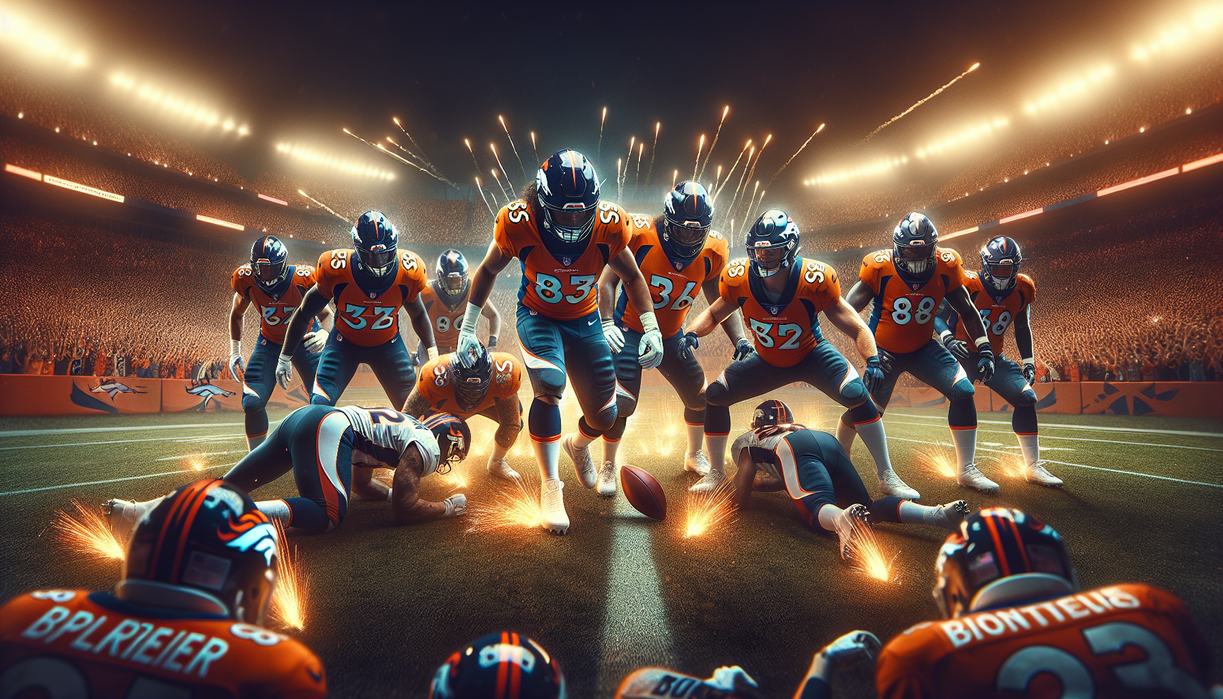
crssblog.com – The Denver Broncos did not simply rush passers this season. They turned every snap into a test of survival for opposing quarterbacks, piling up a franchise-record 68 sacks and leaving a trail of battered jerseys across the league. Their surge transformed games, flipped field position, and revived a proud defensive identity that had faded after the Super Bowl 50 run.
This modern version of the Denver Broncos pass rush relied on creativity rather than just star power. Coordinated pressures, relentless pursuit, and an aggressive attitude turned a solid front into a weekly nightmare for offenses. Quarterbacks knew the hits were coming; the only question was how often and from where.
How the Denver Broncos Built a Relentless Pass Rush
The Denver Broncos did not stumble into 68 sacks by accident. Coaching emphasis, personnel decisions, and schematic tweaks all converged. Instead of chasing only big names, the staff focused on versatile defenders who could win quickly or loop into interior gaps. This blend created mismatches across the line, making protection calls harder on every down.
Another vital piece involved complementary coverage. Defensive backs disrupted timing with physical play at the line plus tight zones behind it. That forced quarterbacks to hold the ball an extra beat, a tiny delay that meant everything for edge rushers. When your corners and safeties trust the rush, you can call more aggressive looks with confidence.
Culture mattered as well. The Denver Broncos defense began to treat sacks like takeaways. Each pressure rep during practice came with competition, trash talk, and accountability. Players chased hustle stats, not only box-score numbers. That mentality showed on Sundays when linemen sprinted from the backside to finish plays other units would consider dead.
Blueprint of Pressure: Schemes, Stunts, and Situational Mastery
From a tactical standpoint, the Denver Broncos leaned on variety. Traditional four-man rushes set the foundation, but constant pre-snap movement forced offensive lines to communicate under stress. Linebackers threatened blitz, then bailed. Safeties crept toward the box, then rotated late. Even simple pressures looked complex because the defense disguised intentions until the last possible moment.
Stunts and games up front became a signature. Tackles crashed toward the center, ends looped outside-to-inside, and interior rushers twisted to exploit slow-footed guards. These designs punished protection schemes that relied heavily on double-teams. Once confusion settled over the blocking unit, individual talent took over. One misstep opened a lane, and a Bronco rusher closed it fast.
Situational savvy gave the Denver Broncos an extra edge. On third down, the defense treated every snap like a money down. You saw lighter, faster fronts plus exotic looks from odd alignments. On early downs, run fits remained disciplined, forcing opponents into long-yardage scenarios. Sacks often trace back to earlier plays where the defense controlled down-and-distance with smart, physical football.
How the Denver Broncos Pass Rush Changed Outcomes
Numbers tell one story, context tells another. Those 68 sacks produced stalled drives, flipped momentum, and even shifted how teams designed game plans during the week. Opponents adjusted protections, kept extra blockers in, and shortened route concepts. That limited explosive plays for offenses and boosted opportunities for Denver Broncos defenders to jump routes or punch the ball loose. From my perspective, this season marked a clear reminder that relentless pressure still dictates modern football. Explosive offenses drive headlines, yet a defense capable of turning every dropback into a gamble can tilt an entire schedule. The Broncos demonstrated how scheme, culture, and effort combine to resurrect a franchise identity, while also hinting at a blueprint other teams will likely try to copy. Their challenge now: sustain that fury, evolve again, and prove this historic sack storm was only the beginning.