

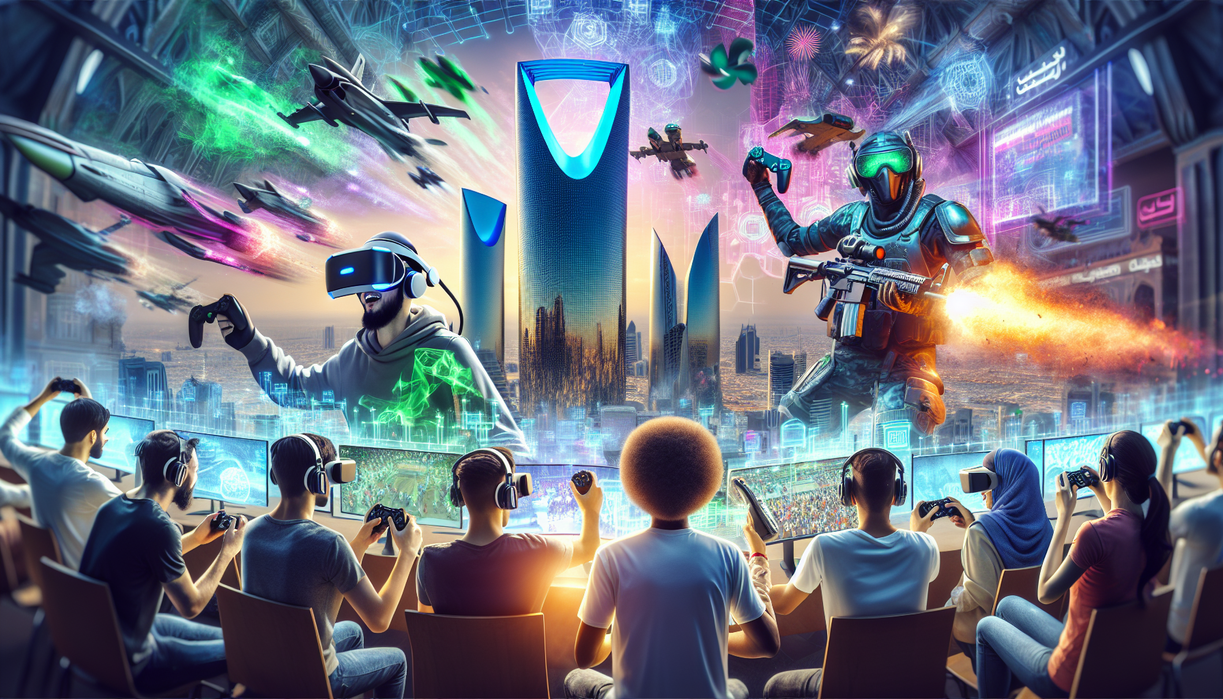
crssblog.com – Game developers gathered in Riyadh are no longer just building entertainment. They are quietly shaping how people learn, connect, and express identity across digital spaces. At Global Games Show Riyadh, every booth and stage session pointed to a future where games become powerful engines for education, creativity, and social impact.
This shift reveals how game developers now influence culture as much as coders once defined the early web. They experiment with immersive worlds, artificial intelligence, and shared online experiences to design new forms of community. Far beyond high scores and leaderboards, modern gaming illustrates how interactive technology might guide the next wave of digital transformation.
From Playgrounds to Platforms: A New Role for Game Developers
At the heart of the Riyadh event, game developers presented prototypes that felt less like toys and more like platforms. Many studios showed interconnected worlds where people attend events, build businesses, or pursue careers. These virtual hubs act as test environments for future cities, workplaces, and campuses. When thousands of players interact inside the same simulation, developers gather insights about behavior, collaboration, and conflict resolution that traditional research can hardly match.
Educational teams, indie studios, and AAA publishers all embraced this broader mission. Instead of focusing purely on spectacle, they discussed long-term engagement, emotional design, and player well-being. The event highlighted how game developers now cooperate with educators, psychologists, and sociologists. Their shared goal is to ensure that digital experiences encourage curiosity, empathy, and resilience rather than just endless consumption.
From my perspective, this marks a profound change in how society views interactive media. For years, people debated whether games were harmful or trivial. The work showcased in Riyadh challenges that view. When game developers commit to thoughtful design, they build spaces where young people test ideas, fail safely, and learn to adapt. Those skills will matter far more than any single exam or static textbook.
Game-Based Learning: Classrooms Meet Controllers
One of the strongest messages at Global Games Show Riyadh centered on learning. Game developers from multiple countries presented simulations that transform complex topics into interactive journeys. Instead of reading about physics formulas, students manipulate virtual environments and see cause and effect in real time. History lessons become branching narratives where learners step into the shoes of key figures, experiencing events through multiple perspectives.
Some teams showcased games that teach coding, languages, and financial literacy. Rather than delivering dry quizzes, they embed knowledge inside engaging challenges. For example, a puzzle game may require basic programming logic to advance, while a story-driven experience nudges players to practice vocabulary through conversation choices. Game developers break large concepts into manageable tasks, encouraging repetition without boredom.
As an observer, I see huge potential here but also responsibility. If schools embrace these tools, they must ensure access for students from different backgrounds. Game developers need to design with low-spec devices and varied connectivity in mind. Otherwise, game-based learning risks widening existing gaps. Done thoughtfully, however, it can democratize high-quality education and reach communities that traditional resources often overlook.
Social Worlds and Digital Communities
Beyond learning, the Riyadh showcase emphasized how game developers shape social spaces. Modern multiplayer worlds operate like digital town squares. People join guilds, attend live concerts, or host meetups entirely within game environments. These interactions help players build confidence, practice teamwork, and connect across borders. The most forward-thinking game developers now treat moderation, safety tools, and community guidelines as core design elements, not afterthoughts. In my view, their work hints at how future online societies may function. If they succeed in building inclusive, respectful communities inside games, their methods could influence broader social networks, remote work platforms, and even virtual governance. Ultimately, the lessons learned from managing millions of players might guide how we design healthier digital cultures everywhere.
Immersive Tech: Where Hardware Meets Human Imagination
Global Games Show Riyadh also highlighted a wave of immersive hardware that pushes creative limits. Virtual reality headsets, motion trackers, and haptic devices allow game developers to build experiences that feel physical rather than abstract. When players can reach out, grasp virtual objects, or sense subtle vibrations, digital worlds become more intuitive. This matters for fields such as medical training, engineering, and emergency response, where realistic practice can save lives.
Several booths demonstrated simulations for pilots, surgeons, and first responders. Game developers collaborate with industry experts to map real procedures into interactive scenarios. Instead of relying solely on expensive equipment or rare training opportunities, professionals can rehearse repeatedly in safe virtual settings. Mistakes become data, not disasters. That loop of experimentation and feedback embodies the best of game design applied beyond entertainment.
From my perspective, the challenge lies in balancing immersion with comfort and accessibility. Not everyone can wear a heavy headset for long sessions. Inclusive design means offering alternative control schemes, adjustable settings, and cloud-based streaming so more people can participate. The most forward-looking game developers at Riyadh appeared keenly aware of these issues, signaling a shift from novelty gadgets to practical, widely usable tools.
AI-Powered Game Developers and Smarter Worlds
Artificial intelligence featured prominently across many presentations. Game developers use AI to generate dynamic environments, adaptive difficulty levels, and lifelike non-player characters. Rather than scripting every possible action, they create systems that respond to player behavior in real time. This results in worlds that feel reactive and personal, as if the game understands each individual style.
Some studios showcased AI tools built for game developers themselves. These assistants help generate concept art, prototype levels, or test balance issues faster. Although concerns about automation and creativity surfaced in panel discussions, most speakers viewed AI as a collaborator, not a replacement. Game developers still provide vision, taste, and narrative direction, while AI handles repetitive or technical tasks that once slowed down small teams.
Personally, I believe success here will depend on transparency and ethics. Players deserve to know when AI influences outcomes or personalizes experiences. Game developers must also protect data privacy, especially when analyzing player behavior. If the industry gets this right, AI-driven games could feel more inclusive, since they adapt to different skills, preferences, and access needs. If misused, however, they risk becoming manipulative, focusing solely on maximizing engagement rather than meaningful play.
Indie Game Developers as Innovation Engines
While major publishers occupied large stages, many of the most daring ideas came from indie game developers tucked into smaller corners of the hall. Independent teams often experiment with unconventional stories, minimalist graphics, or unusual control schemes. Free from heavy franchise pressure, they explore topics like mental health, climate change, or cultural identity with striking honesty. Their prototypes may not always achieve mass-market polish, yet they frequently inspire bigger studios to rethink formulas. Observing these creators in Riyadh, I was reminded that innovation rarely comes only from the top. The ecosystem thrives when game developers of every scale can share tools, funding, and distribution channels. Supporting that diversity should be a priority for events, investors, and policymakers hoping to nurture a vibrant global gaming culture.
The Road Ahead: Responsibility, Regulation, and Opportunity
The conversations in Riyadh often circled back to ethics and governance. As game developers build ever more immersive and influential worlds, questions of responsibility grow sharper. How should they handle addictive design patterns, predatory monetization, or harmful content? Panels explored rating systems, parental controls, and transparent business models that respect players’ time and resources. Governments, educators, and industry leaders all voiced interest in supportive frameworks instead of heavy-handed crackdowns.
One recurring idea involved co-creation with players. Many game developers now invite communities into early testing, open modding tools, or shared world-building platforms. Instead of treating players as consumers, they view them as creative partners. This approach builds trust yet also requires humility. Studios must be willing to listen, change plans, and acknowledge mistakes in public. At the Riyadh event, the most respected voices seemed to be those who embraced that dialogue.
In my view, this collaborative future holds enormous promise. When game developers, players, educators, and policymakers sit at the same table, they can address concerns before crises arise. They can also align on shared goals: healthier online spaces, fairer economies, and more accessible technology. The Global Games Show Riyadh served as an early blueprint for that kind of partnership-driven ecosystem.
Personal Reflections on a Turning Point
Walking through the exhibition halls, one thought kept returning: games have outgrown their old box. What once seemed like a pastime now operates as a laboratory for society’s digital future. Game developers test how identity, reputation, and collaboration might work in tomorrow’s virtual cities. They experiment with currencies, governance systems, and creative tools at a scale that few other industries can match.
This realization also carries a warning. Power without reflection can do real harm. If game developers chase only profit or attention metrics, they risk designing systems that exploit human psychology instead of uplifting it. Yet the tone in Riyadh felt cautiously optimistic. Many talks emphasized mental health, inclusivity, and long-term trust, not just flashy trailers or revenue charts.
Ultimately, my strongest takeaway is that everyone now has a stake in how game developers work. Parents, teachers, business leaders, and policymakers should pay attention, not just to content ratings but to the design philosophies shaping these worlds. Asking tough questions, offering constructive feedback, and celebrating responsible innovation will influence where this momentum leads.
Conclusion: Beyond Games, Toward Shared Futures
Global Games Show Riyadh revealed how game developers stand at a crossroads between entertainment and infrastructure, between fantasy and everyday life. Their creations entertain millions, yet they also train surgeons, teach students, and connect strangers across continents. The choices these creators make about mechanics, stories, safety, and fairness will echo far beyond the screen. As immersive tech advances and AI reshapes creative work, society must treat games not as distractions but as powerful cultural forces. Reflecting on the event, I am convinced that the most important question is no longer “Are games good or bad?” but rather “What kind of worlds do we want game developers to build, and how will we help them build wisely?”