

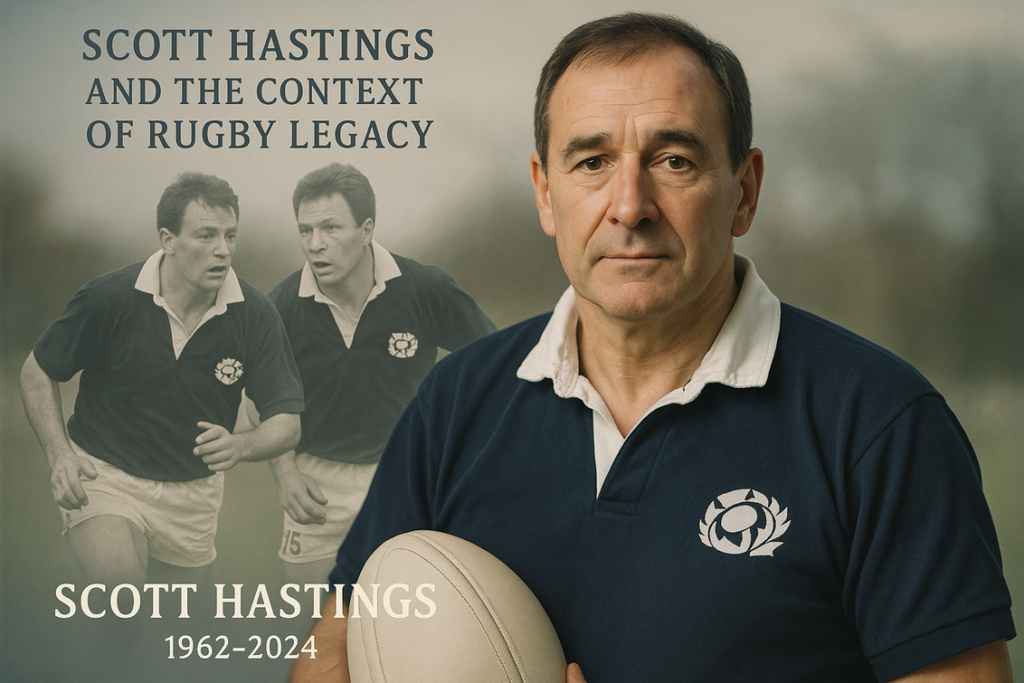
crssblog.com – The context surrounding Scott Hastings’ life and career stretches far beyond a simple list of caps, tries, and trophies. His death at age 61 invites a deeper look at how one player, alongside his brother Gavin, helped shape the wider context of Scottish rugby culture, identity, and pride. To understand Scott Hastings is to explore the context of an evolving sport, a passionate nation, and a bond between siblings who became icons.
When we place his achievements in proper context, Scott Hastings appears not only as a superb center but also as a bridge between amateur heroics and the modern professional era. His influence touched teammates, opponents, supporters, and young players who saw in him a model of courage. Reflecting on his legacy means revisiting the context of the rivalries, tours, and hard-won victories that defined late‑20th‑century rugby.
Scott Hastings in Sporting Context
Scott Hastings emerged during a period when Scottish rugby carried high expectations yet fought persistent challenges. In that context, he offered power in defense, clever running lines, and a relentless competitive edge. Playing center required more than strength or speed; it demanded tactical understanding of context on every phase, every kick, every counterattack. Hastings read that context with remarkable clarity, shifting from distributor to strike runner in an instant.
He first stepped onto the international stage at a time when Scotland balanced traditional forward power with a more expansive backline philosophy. This context suited his skill set. He thrived in broken play, turning half‑chances into full opportunities. Supporters remember not only big hits and line breaks but also the subtle reads, the way he reacted to context before others sensed danger or possibility.
Touring with the British and Irish Lions added another layer of context to his story. There he wore the same colors as long‑time rivals, forging chemistry with players from across the Home Nations. That experience reframed his understanding of rugby culture. It provided context for how different styles could blend into a single cohesive unit. Those tours helped shape him as a leader, communicator, and ambassador for the sport.
Brotherhood, Identity, and the Wider Context
No account of Scott Hastings is complete without mentioning his brother Gavin. Together they produced a powerful narrative rooted in family context. Two brothers, both Lions, both central to Scotland’s hopes, created a unique dynamic on the field. The context of sibling trust made their partnership distinctive. They anticipated each other’s movements, shared standards, and carried responsibility for national expectations.
This fraternal context resonated with supporters. Fans saw more than two talented players; they saw a family story unfolding on muddy winter pitches and grand international arenas. That context deepened emotional investment. When Scotland triumphed, it felt like a shared family success. When defeat arrived, the brothers faced it together. Their unity symbolized a broader sense of Scottish identity, built on resilience, humor, and loyalty.
From a personal perspective, such context matters as much as match statistics. Sport is never only about points or rankings; it is shaped by relationships, shared histories, and cultural meanings. The Hastings brothers offered a compelling context for understanding what it means to represent a small nation against larger powers. Their story underscores how rugby, at its best, gives context to ideas of belonging, responsibility, and national pride.
Context, Transformation, and Remembering Scott Hastings
Placing Scott Hastings’ passing in today’s context invites reflection on how rugby has transformed. The game is faster, more commercial, more data driven. Yet the values Hastings embodied remain essential reference points. His era provides context for conversations about player welfare, respect for opponents, and connection with supporters. My own view is that remembering figures like Hastings helps resist the drift toward viewing rugby only as content or product. Instead, his life invites us to see the sport in fuller context: a human endeavor where courage, vulnerability, family ties, and national memory intersect. In that context, Scott Hastings’ legacy will continue to influence how Scotland understands its rugby past and imagines its future.