

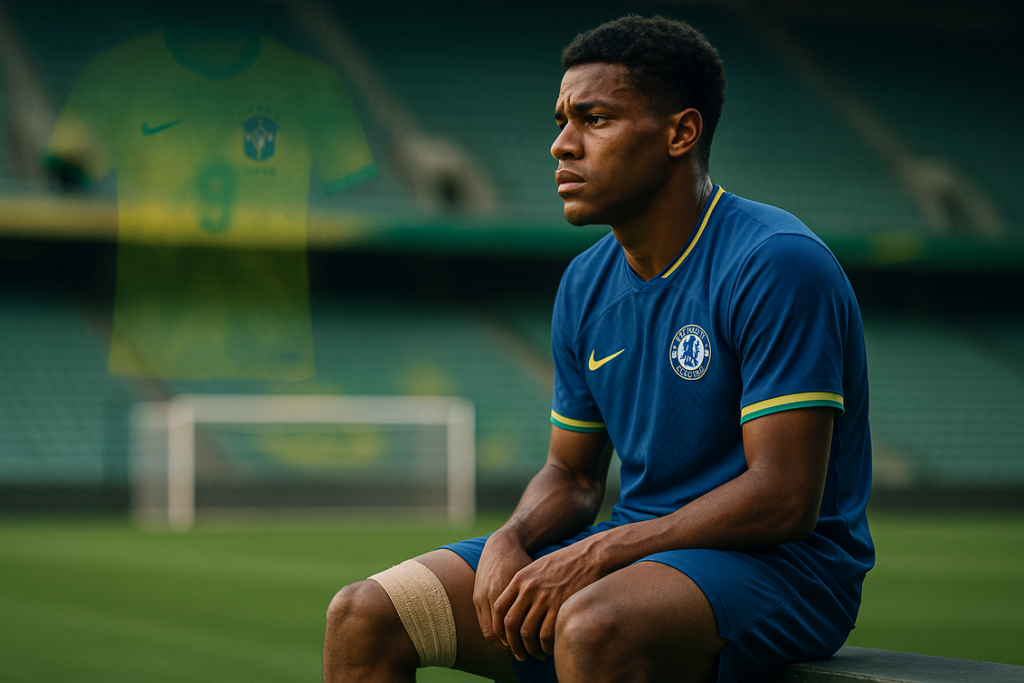
crssblog.com – Sports headlines from Brazil took a dramatic turn as news broke that teenage sensation Estevao will miss the World Cup with a thigh injury. The Chelsea sports forward, only 19 years old, has not played since hobbling off against Manchester United on April 18, a moment that now feels like a turning point for both club and country. His absence forces Brazil to rethink not only tactics but also the symbolic direction of a squad caught between bold renewal and familiar superstardom.
At the same time, Neymar’s inclusion on an expanded sports roster pushes the conversation in a very different direction. Once the undisputed face of Brazilian football, Neymar now returns as a veteran presence rather than the automatic centerpiece. This contrast between an injured prodigy and a recalled icon captures the tension in Brazilian sports: how to balance tomorrow’s promise with yesterday’s brilliance, especially under the ruthless spotlight of a World Cup.
Estevao’s injury reshapes Brazil’s sports blueprint
Estevao’s rise over the past year transformed him into one of the brightest storylines in global sports. His explosive acceleration, quick feet, and fearless dribbling gave Brazil a fresh, joyful edge on the right flank, reminiscent of classic Selecao wingers. Losing that profile weeks before a World Cup is not simply a tactical setback; it strikes at the emotional core of supporters eager to see a new generation carry the yellow shirt with flair. For many fans, Estevao represented hope that Brazil’s next era had already begun.
From a sports science angle, a thigh injury for a pace-based forward is cause for serious caution. Brazil’s staff must weigh long‑term health against short‑term desperation. Forcing a teenager through a high‑intensity tournament could risk chronic issues. Chelsea will also demand prudence, since the club invested heavily in Estevao’s potential. When national pride collides with multi‑million‑euro careers, medical decisions grow complex, yet the ethical answer stays simple: protect the player before the tournament.
Tactically, Estevao’s absence removes a direct runner who stretches defenses horizontally and vertically. Without him, Brazil may lean more on combination play through the middle or depend on overlapping full‑backs for width. Coaches now face a choice: call up a like‑for‑like winger with less pedigree, or remodel the attack around different strengths. My view: instead of hunting for a poor imitation, they should double down on versatility, using midfielders and full‑backs to share creative duties across multiple zones.
Neymar’s return: legacy, risk, and sports marketing
Neymar’s presence on the expanded sports roster raises several layers of debate. On one level, his experience remains priceless. He has lived the full emotional spectrum of modern football: World Cup pressure on home soil, harsh criticism, injuries, and global superstardom. In a dressing room filled with 20‑year‑olds, that knowledge can stabilize nerves. Players listen differently when advice comes from someone who has carried a nation’s expectations for a decade.
Yet football reality does not fully align with marketing logic. The sports world still sees Neymar primarily as a headline magnet, though his career has been interrupted repeatedly by injuries and moves to less competitive leagues. The question for Brazil’s staff is whether his current performance level justifies selection over hungry contenders. Name recognition helps television ratings; it does not press opponents, track back, or close passing lanes. Risk appears when sentiment overrides form in roster choices.
From my perspective, Neymar’s inclusion makes sense only under clear tactical conditions. He should no longer be the automatic starter around whom every move revolves. Instead, he can function as a specialized weapon: a creator between lines against low blocks, or a late substitute when Brazil needs a goal. Managed minutes protect his body while maximizing his unique vision and set‑piece skill. Used like this, he becomes an asset rather than a nostalgic compromise.
Balancing sports tradition with future innovation
Brazil’s current situation encapsulates a timeless sports dilemma: how to honor tradition without suffocating innovation. Estevao’s injury delays the symbolic handover to a new generation, while Neymar’s return revives questions about attachment to familiar faces. The smartest path lies somewhere between blind loyalty and brutal renewal. Brazil must invest fully in young structures—sports science, analytics, youth development—so future Estevaos emerge not as rare miracles but as consistent outcomes. At the same time, the squad can still draw strength from veterans who accept adapted roles. If Brazil manages that balance, this World Cup could be remembered not primarily for who missed out, but for how a footballing giant used adversity to redesign its sports identity with courage, intelligence, and humility.