

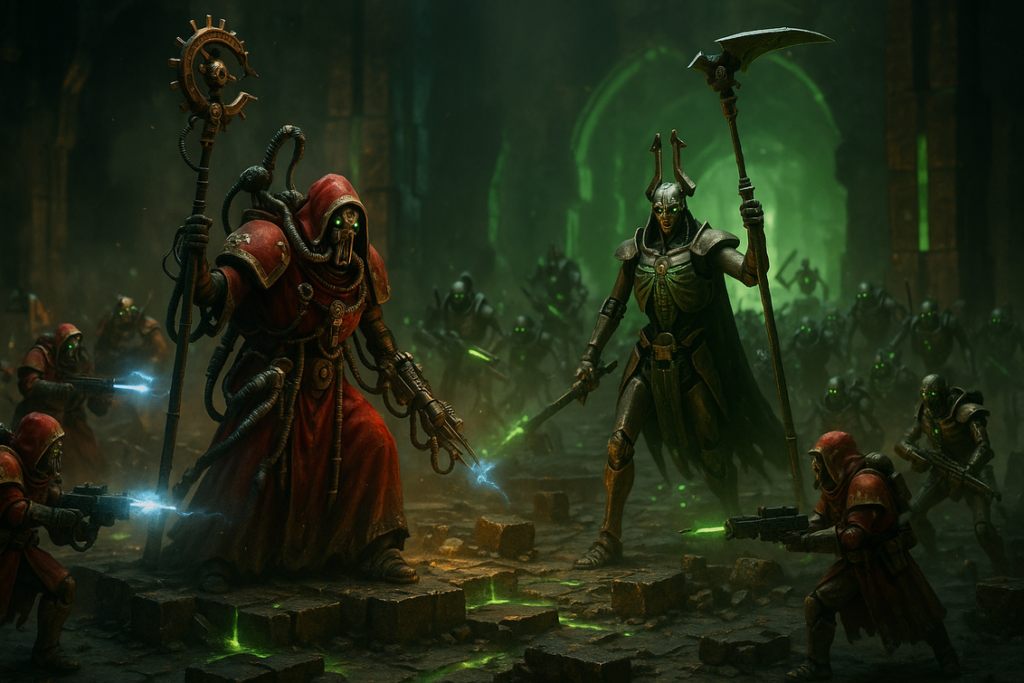
crssblog.com – Warhammer 40,000 fans have a new campaign to anticipate, as Warhammer 40,000: Mechanicus II storms onto PS5, Xbox Series, and PC on May 21. This sequel promises a heavier focus on strategy, narrative choice, and large‑scale planetary warfare. Players will command either the ever‑calculating Adeptus Mechanicus or the immortal Necron legions in a fresh dual‑campaign format that amplifies tension across the galaxy.
Instead of a simple continuation, Warhammer 40,000: Mechanicus II reimagines the original’s tactical formula with deeper mechanics and a more brutal vision of conflict. Expect denser customization, layered decision‑making, and sprawling operations across contested worlds. For newcomers to Warhammer 40,000, this release offers an accessible entry, while veterans gain an intricate playground for tactical experiments and grimdark storytelling.
Warhammer 40,000 Strategy Reforged
Warhammer 40,000 has always revolved around ruthless battles across a decaying galaxy, yet the Mechanicus sub‑series shines by focusing on cerebral warfare. Mechanicus II builds on that identity with advanced tactical systems centered on positioning, synergy, and precise resource management. Every move must serve a purpose, since a single misplay can cost critical units or sabotage a long‑term campaign plan. The sequel seeks to preserve the original’s methodical pacing while expanding both freedom and consequences.
At its core, this game is about controlling the battlefield through clever planning rather than brute force. Adeptus Mechanicus forces rely on calculated firepower, sacred technology, and careful coordination. Necrons operate as a relentless tide, leveraging durability, resurrection protocols, and terrifying weapons. Each faction draws from iconic Warhammer 40,000 lore, translated into distinct tactical identities. That asymmetry should keep battles fresh, since strategies effective for one side might fail horribly for the other.
From a design perspective, Mechanicus II attempts to capture the feeling of war as an evolving puzzle. Instead of isolated skirmishes, every encounter fits into a broader conflict over a contested planet. Each mission shapes future maps, enemy aggression, and the narrative tone. Strategy enthusiasts who enjoy seeing long‑term choices ripple through a campaign will likely appreciate this approach. It reflects the grim, attritional nature of Warhammer 40,000, where victory seldom arrives without heavy sacrifice.
Dual Campaigns: Necrons vs Adeptus Mechanicus
One of the boldest moves for Warhammer 40,000: Mechanicus II lies in offering a full dual‑campaign experience. Players can step into the role of Adeptus Mechanicus commanders or take control of Necron dynasties. This structure offers more than simple replay value. Each path presents unique priorities, ethics, and tactical rhythms. Switching perspective reveals how the same war looks completely different from both sides, echoing the franchise’s fascination with conflicting ideologies.
On the Adeptus Mechanicus side, storylines usually revolve around pursuit of knowledge, sacred technology, and unwavering loyalty to the Omnissiah. Warhammer 40,000 often portrays these tech‑priests as zealots balanced between logic and dogma. In Mechanicus II, that contrast likely informs gameplay choices: will you risk entire cohorts for impossible data caches, or stay conservative to preserve forces? Upgrades, research tracks, and faction‑specific units should reflect this obsession with machinery and forbidden innovation.
Controlling the Necrons unlocks a different flavor of horror. Immortal warriors rise from ancient tombs, following inscrutable dynastic codes while wielding devastating weaponry. Mechanicus II has an opportunity to showcase Necron culture with more nuance than many Warhammer 40,000 games attempt. Instead of faceless enemies, Necron leaders could display pride, ambition, or bitterness at a galaxy claimed by upstart species. From a narrative standpoint, exploring both campaigns promises a richer sense of context for the overall conflict.
Planetary Conquest and Strategic Layer
Beyond individual missions, Warhammer 40,000: Mechanicus II emphasizes planetary conquest where every choice shapes the fate of contested worlds. Players map out operations across regions, secure vital resources, and respond to emergent threats. This higher‑level strategy layer supports grand narratives: empires rise, strongholds fall, and pivotal territories change hands. Successful campaigns should reward careful pacing instead of reckless expansion. From my perspective, this planetary focus fits the Warhammer 40,000 setting perfectly, since it mirrors the tabletop game’s obsession with entire worlds locked in eternal war.
Army Customization in the Grimdark Future
Army customization often defines the Warhammer 40,000 experience, whether on tabletop or screen. Mechanicus II appears committed to that spirit with expanded options for tuning forces. Instead of generic squads, players can shape individual units with weapons, augments, and tactical roles. Adeptus Mechanicus cohorts might lean toward long‑range fire, heavy melee, or support builds. Necron cadres could specialize in aggressive teleportation, resilient phalanxes, or surgical elimination of priority targets.
This level of personalization encourages experimentation. Two players could choose Adeptus Mechanicus yet field completely different armies. One might create a slow, indestructible wall with layered buffs. Another prefers fragile but lethal glass cannons, supported by clever positioning and terrain control. Warhammer 40,000 thrives when units feel like characters rather than pieces, so richer customization will likely deepen emotional investment in every battle. Losing a heavily upgraded specialist will sting far more than watching a nameless soldier fall.
There is also a narrative reward in this approach. As campaigns progress, your customized forces become a reflection of your decisions and philosophy. A commander obsessed with data acquisition may favor tech‑priests equipped for scanning and hacking, while a ruthless warlord focuses on raw firepower. Over time, your army tells its own story, echoing classic Warhammer 40,000 themes about identity, sacrifice, and the cost of power. Mechanicus II seems poised to tap into that storytelling potential through its progression systems.
Tactical Depth Without Overwhelming Newcomers
Many strategy games struggle to balance depth with accessibility, especially inside a lore‑heavy universe like Warhammer 40,000. Mechanicus II faces that same challenge. Based on early information, the developers appear to target an experience where players can grasp fundamentals quickly yet continue discovering new layers. Clear interface design, readable battlefields, and transparent unit statistics will be vital. If those elements work, complexity can grow without causing paralysis for new players.
One encouraging sign is the dual‑campaign setup itself. Beginners might start with the faction that feels more intuitive, then tackle the other once core mechanics feel comfortable. The Adeptus Mechanicus could introduce resource management and positioning in a methodical way. Necrons might emphasize durability and momentum, highlighting risk versus reward. Warhammer 40,000 settings carry so much lore that an approachable gameplay structure can serve as a welcoming entry point rather than a barrier.
From my personal standpoint, the ideal outcome is a game where decisions feel weighty yet never opaque. Players should understand why a mission failed, then adjust builds or tactics accordingly. If Mechanicus II hits that mark, it will satisfy veterans who crave complexity without abandoning curious newcomers. That balance often separates fleeting titles from enduring strategy classics, especially inside a franchise as storied as Warhammer 40,000.
Visual Identity and Atmosphere
Although mechanics sit at the heart of any strong strategy title, atmosphere matters enormously for Warhammer 40,000 experiences. Mechanicus II has an opportunity to enhance the original’s haunting techno‑gothic aesthetic with richer environments and more expressive animations. Adeptus Mechanicus forces should feel like walking altars of steel, wires, and incense. Necron tomb worlds must convey an eerie, ancient menace, with shifting monoliths and unsettling green light. Strong art direction ties all those elements together, reinforcing immersion during lengthy campaigns.
Why Mechanicus II Matters for Warhammer 40,000
Warhammer 40,000: Mechanicus II arrives in a landscape crowded with adaptations, from shooters to cooperative action titles. Its significance lies in spotlighting a slower, more thoughtful slice of the universe. Instead of sprinting through firefights, players sit with difficult choices, manage scarce resources, and accept painful trade‑offs. That deliberate tempo captures the setting’s core tragedy: victory often demands moral compromise, not just superior firepower.
Moreover, the dual‑perspective format answers a long‑standing desire among fans to inhabit opposing factions with equal depth. Many Warhammer 40,000 games present enemies as one‑note antagonists. Mechanicus II counters that pattern by giving Necrons a fully realized campaign. This could encourage empathy even for the most terrifying warriors, underlining how every side believes itself justified. Such nuance enriches the overall canon, suggesting new interpretations of classic conflicts.
From a broader industry view, a successful release might encourage other developers to pursue more ambitious turn‑based projects within established universes. If players embrace Mechanicus II’s planetary strategy, layered campaigns, and heavy narrative weight, publishers may grow more willing to fund similarly complex titles. That shift would benefit not only Warhammer 40,000 fans, but also strategy devotees craving dense, replayable experiences.
Personal Hopes and Concerns
As someone who appreciates intricate strategy games, I see Warhammer 40,000: Mechanicus II as a promising evolution, yet not without potential pitfalls. Depth can easily drift into micromanagement, especially with detailed army customization and planetary governance. If the interface becomes cluttered or progress feels grindy, even dedicated players might struggle to stay engaged. Striking the right tempo between mission variety, narrative beats, and mechanical complexity will be crucial.
I also hope the writing leans into the weird, esoteric side of Warhammer 40,000 instead of flattening it into simple heroics. Adeptus Mechanicus characters shine when their faith clashes with logic, creating darkly comic or tragic moments. Necron leaders can oscillate between regal arrogance and cosmic despair. Strong characterization across both campaigns could elevate the entire experience from solid tactics game to memorable epic.
On the technical side, performance stability and smart quality‑of‑life features matter greatly for long campaigns. Smooth load times, clear tooltips, customizable controls, and flexible difficulty options can transform an otherwise daunting strategy title into a long‑term companion. If Mechanicus II delivers polished systems alongside its ambitious design, it may stand as one of the more enduring digital adaptations of Warhammer 40,000.
A Reflective Closing Thought
Warhammer 40,000: Mechanicus II does more than add another entry to the franchise’s crowded release calendar. It invites players to dwell in the slow burn of planetary war, to watch empires erode one decision at a time, and to examine both sides of a conflict often reduced to stereotypes. Whether you feel drawn to chanting tech‑priests or resurrected dynasts, this game asks you to think carefully before every order. In that quiet, relentless calculation lies the true soul of Warhammer 40,000—where hope flickers faintly, yet strategy and stubborn will can still shape the fate of worlds.