

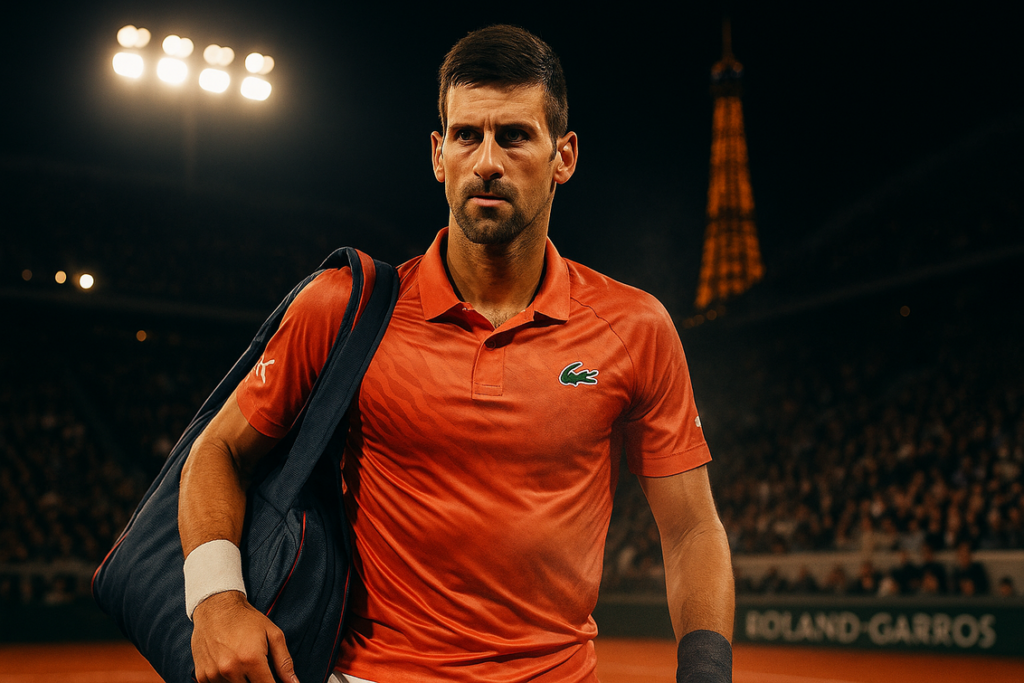
crssblog.com – Novak Djokovic is about to enter another chapter of grand slam history at Roland Garros, yet this time the script feels unfamiliar. The world has grown used to seeing him arrive at major events finely tuned, battle-hardened, and brimming with victories from the warm‑up swing. Instead, he steps into his record 82nd grand slam appearance with a sorely limited clay schedule behind him and questions circling about form, fitness, and desire.
This contrast makes his latest French Open journey one of the most intriguing storylines of the season. Djokovic remains the sport’s gold standard in grand slam performance, although he now must balance age, a recent shoulder problem, and shifting priorities. Fans sense a crossroads: is this another dominant run or the beginning of a different phase, where survival counts as much as silverware?
A Record 82nd Grand Slam Test
Reaching a men’s record 82nd grand slam main draw is not mere accumulation; it represents a long career built on resilience. Djokovic has competed across eras, facing legends like Federer and Nadal before fending off younger challengers. Surviving that sort of revolving door requires steady discipline, surgical scheduling, and an ability to peak when the spotlight brightens. This Roland Garros marks proof he can still summon that commitment, yet the preparation gap brings a new flavor of uncertainty.
Unlike prior seasons, his clay build‑up has felt almost experimental. Instead of long winning streaks on European red dirt, he has carried a stop‑start rhythm influenced by a shoulder layoff. Practice sessions can sharpen strokes, although nothing replicates the physical chaos of real competition. That missing edge could surface in early rounds, where opponents with nothing to lose often swing freely against a legend whose aura shows minor cracks.
Yet history warns against underestimating Djokovic at a grand slam. Through the years he has turned slow starts into deep runs with ruthless efficiency. His return game still ranks among the best, his defense remains elastic, and his tactical mind processes patterns faster than most rivals. Even with limited match play, he knows how to stretch a best‑of‑five encounter until an opponent’s confidence begins to fray under relentless pressure.
Limited Match Play, Unlimited Expectations
What makes this French Open fascinating is the gap between expectations and evidence. On paper, Djokovic stands as the benchmark of grand slam excellence, holder of countless records and a three‑time champion in Paris. On current form, however, he arrives with modest results on clay, a few early exits, and not nearly enough rhythm. The shoulder issue that paused his schedule lingers in conversations, even if he insists recovery is complete.
I view this tension as both risk and opportunity. On one hand, limited match play reduces automatic timing on returns, passing shots, and long rallies. On the other, it may leave him fresher for the grueling two‑week grand slam marathon. Many veterans have learned that constant grinding before a major often backfires. Djokovic appears to be leaning into a lighter calendar, betting his experience and mental habits can cover for rust when the stakes rise.
His openness about shifting priorities also shapes this narrative. Earlier in his career, every event felt like a must‑win mission. Today he speaks more about family, legacy, and balance. That evolution alters how he measures success during a season. Yet grand slam tournaments remain his chosen stage; he has often admitted that history motivates him most at these four events. Even with fewer tune‑ups, I expect him to treat Roland Garros as a proving ground for this new, more selective approach.
How Strategy Could Trump Rust
If Djokovic extends his stay in Paris, it will likely be because strategy outwits rust. Expect him to manage energy carefully, shorten points with sharper first‑serve placement, and rely on his trademark depth to keep rivals pinned behind the baseline. Early matches might feature occasional misfires, especially on heavy clay evenings where the ball drags through the court. Still, his intelligence in shot selection rarely disappears. From my perspective, the key lies in navigating the first week without emotional panic. If he reaches the second week relatively healthy, muscle memory from a lifetime of grand slam pressure should reawaken, turning a precarious campaign into another compelling push for history. The outcome remains uncertain, although the journey promises a window into how great champions adapt as time rewrites the rules.
The Psychology of a Grand Slam Giant
Physical doubts dominate most pre‑tournament debates, yet the inner dimension may matter more for Djokovic here. Every grand slam requires mental endurance, although Roland Garros can feel especially unforgiving. Long rallies, five‑set marathons, and unpredictable weather test focus as much as fitness. Djokovic has built a reputation as a psychological fortress, often thriving when a crowd roars against him. Still, entering with fewer wins can plant small seeds of doubt even in a champion’s mind.
The shift from weekly tour events to a grand slam stage can also reset his mentality. At majors he tends to simplify goals: survive each round, adapt tactically, avoid drama when possible. This stripped‑down approach has carried him through countless chaotic days at big tournaments. I suspect that, despite the external noise about form, he will internally frame this French Open as an opportunity to rediscover peak intensity rather than another obligation to collect records.
From my vantage point, the mental game may even benefit from low expectations. Many fans and analysts now speak more about new stars, which slightly reduces the suffocating pressure he once carried. Playing with something closer to freedom could unleash his creativity, especially on clay where variety pays off. If he embraces that underdog‑within‑a‑legend status, we might see a looser, more expressive Djokovic, willing to experiment with drop shots, higher net approaches, and bold returns to seize early momentum.
Legacy, Numbers, and the Grand Slam Clock
Every additional grand slam appearance stretches Djokovic’s legacy into territory we rarely imagined two decades ago. Eighty‑two main draws at the sport’s highest level reveal not only success but also survival. He has lived through rule changes, technological shifts, and multiple waves of rivals. The raw tally of trophies tends to dominate debates, yet consistent presence at this altitude might be the more astonishing feat. Few athletes stay near the summit for so long without suffering deep motivational dips.
There is also the quieter question of the ticking clock. Younger champions are emerging, hungry for their first or second grand slam title, unconcerned with records, focused only on breakthrough. Djokovic must now plot routes through draws packed with explosive power and fearless shot‑making. Experience still grants him edges in pattern recognition and emotional control, but he cannot outrun the natural arc forever. Each Roland Garros could, in theory, be his last serious title chance in Paris, especially on the most physically demanding surface.
Personally, I find this stage of his journey more compelling than his peak dominance. Perfection has its beauty, yet the later years reveal character under the weight of history. Djokovic must decide, round by round, how much pain he is willing to endure for one more grand slam shot. That inner negotiation between ambition and acceptance turns every match into a small drama. Whether he exits early or lifts the trophy, we witness an athlete grappling with time, legacy, and the stubborn desire to leave nothing unexplored.
What This French Open Could Mean
As Djokovic steps onto the red clay for his 82nd grand slam campaign, the moment feels heavier than a routine opening match. It encapsulates the tension between past supremacy and an uncertain future, between careful scheduling and the need for competitive sharpness. However this French Open unfolds, it will enrich the story of how a transcendent champion manages aging, injury recovery, and shifting motivation while still chasing the rarest prizes. For fans and observers, the real reward may not be another record, but the chance to watch a great competitor confront vulnerability with open eyes, accepting every outcome while still reaching for one more surge of brilliance.